
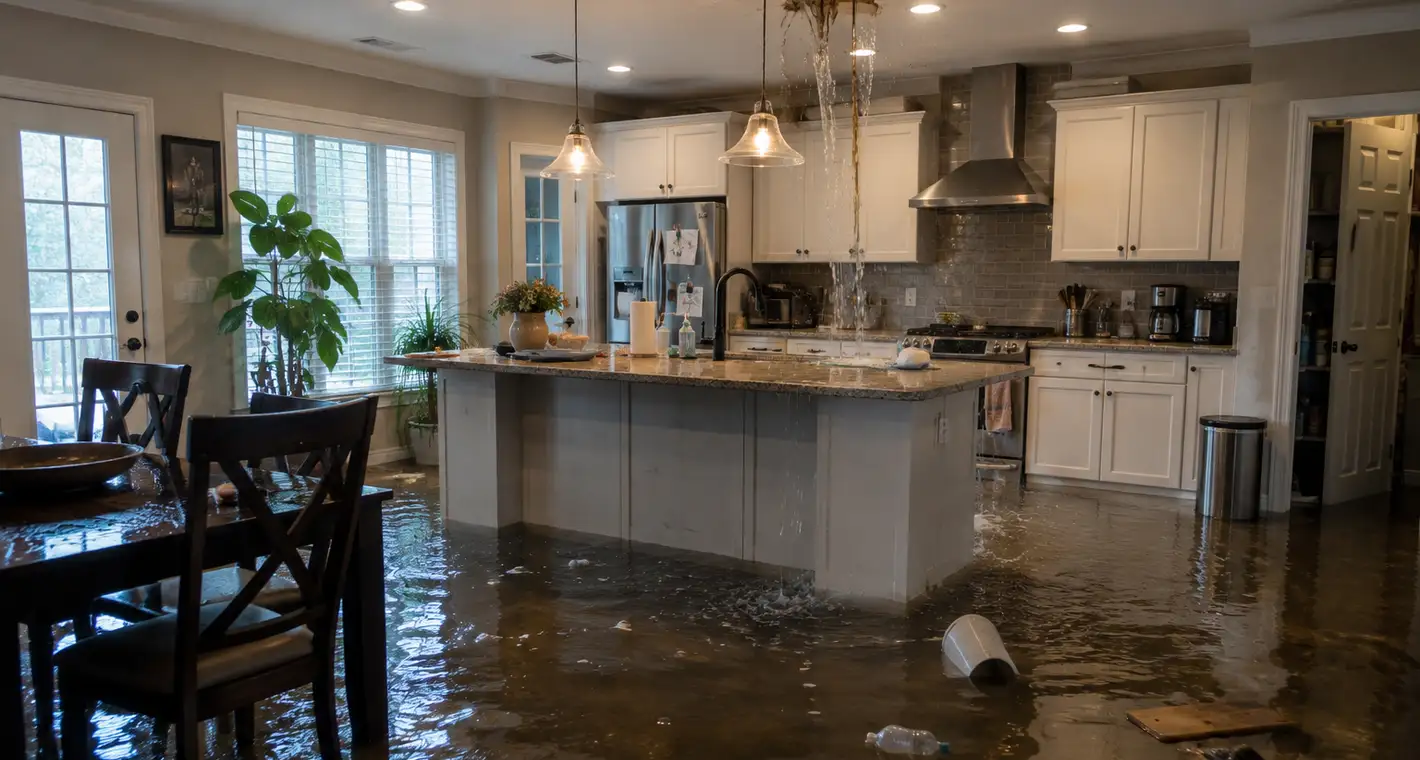
Keep out of the affected area
- Keep children and pets away from the area entirely.
- Do not run fans in the space. Moving air spreads contamination through the house.
- Do not attempt to extract it with household equipment.
- Avoid using drains and fixtures on that line until the cause is identified.
- Photograph the extent before anything is moved.
Why sewage is a different job
With clean water, the problem is moisture and the goal is to get materials back to normal. With sewage, moisture is the secondary issue. The water carries bacteria and organic material that soak into porous surfaces and stay there after the water is gone. Extracting and drying a carpet that has been through a sewage backup returns it to normal moisture while leaving the contamination in place.
That single fact drives the whole approach. Rather than asking what can be dried, the work asks what can be cleaned all the way through. Material that can only be cleaned on the surface comes out.
How the work proceeds
The area is contained before anything is removed. Openings to the rest of the house are sheeted off and the work zone is put under negative pressure, so air flows into it and is filtered on the way out rather than carrying contamination into clean parts of the home. Skipping this step means the removal itself distributes the problem.
Affected porous material is then removed and bagged. That typically means carpet and padding, the lower band of drywall, wet insulation, particleboard, and laminate or engineered flooring. Non-porous material such as concrete, tile, sealed hardwood and structural framing can usually be cleaned and kept, since contamination stays on the surface where it can be reached.
Cleaning follows removal, and only after cleaning does the structure get dried in the ordinary way, with air movers and dehumidification under moisture readings. Drying before cleaning would set contamination into the materials being dried.
Where these losses come from in McLennan County
Clay laterals under moving ground
Sewer laterals installed decades ago in clay pipe run from older houses in Waco, Bellmead, Lacy-Lakeview, McGregor and West to the main. Blackland clay swells and shrinks around them every year, which works the joints open, and roots from the mature oaks and pecans on those streets follow the moisture in. On a slab house the backup surfaces at the drain closest to the floor, usually a ground-floor tub or shower.
Main line surcharge during heavy storms
Central Texas storms can put three to five inches of rain down in a few hours, and flow in the municipal system rises with it. Where a property sits low relative to the main, that pressure pushes back up the lateral rather than draining away, which is why backups cluster during the same storms that flood streets.
Septic drain fields in saturated clay
Properties outside the sewered areas, common around Robinson, China Spring and the county roads, rely on septic. A drain field needs soil that can accept effluent, and Blackland clay accepts very little once it is saturated. After several days of rain the field stops working and wastewater backs toward the house.
Sewage cleanup by city
- WacoZIP 76701, 76704, 76705, 76706, 76707, 76708, 76710, 76711, 76712
- HewittZIP 76643
- WoodwayZIP 76712
- RobinsonZIP 76706
- BellmeadZIP 76705
- Lacy-LakeviewZIP 76705
- China SpringZIP 76633
- McGregorZIP 76657
- LorenaZIP 76655
- WestZIP 76691
Frequently Asked Questions
- Why can sewage water not simply be extracted and dried?
- Because the concern is contamination rather than moisture. Water from a sewer backup carries bacteria and organic material that remain in porous surfaces after the water itself is gone. Drying a saturated carpet returns it to normal moisture but does nothing about what soaked into it, which is why porous material affected by sewage is removed rather than dried.
- What has to be removed after a sewage backup?
- Generally carpet and padding, the lower band of drywall, wet insulation, particleboard and any laminate or engineered flooring the water reached. Non-porous surfaces such as concrete, tile, sealed hardwood and framing can usually be cleaned and kept. The dividing line is whether the material can be cleaned all the way through or only on the surface.
- Is a backup from a clean toilet treated the same way?
- Water from a toilet overflow that has not passed the trap is a lesser category and is handled less aggressively. Once water has come back up from the lateral or the main, or has passed through the trap, it is treated as contaminated regardless of how it looks or smells. Describe what actually happened when you call, since the two get very different responses.
- How is the rest of the house kept clean during the work?
- The affected area is contained before removal starts, usually with sheeting over openings and negative air pressure inside the work zone so air flows into it rather than out into the rest of the home. Material comes out bagged. Without containment, the removal itself distributes contamination through the house.
- Why are sewer backups common in older Waco neighborhoods?
- The laterals running from older houses to the main have been in the ground for decades, and in this area they have spent that entire time in expansive clay that swells and shrinks every year. That movement works the joints of a clay lateral open, roots follow the moisture in, and the line restricts until it backs up. Sanger Heights, Castle Heights, Brook Oaks and the older parts of Bellmead and McGregor hold a concentration of lines of this age.